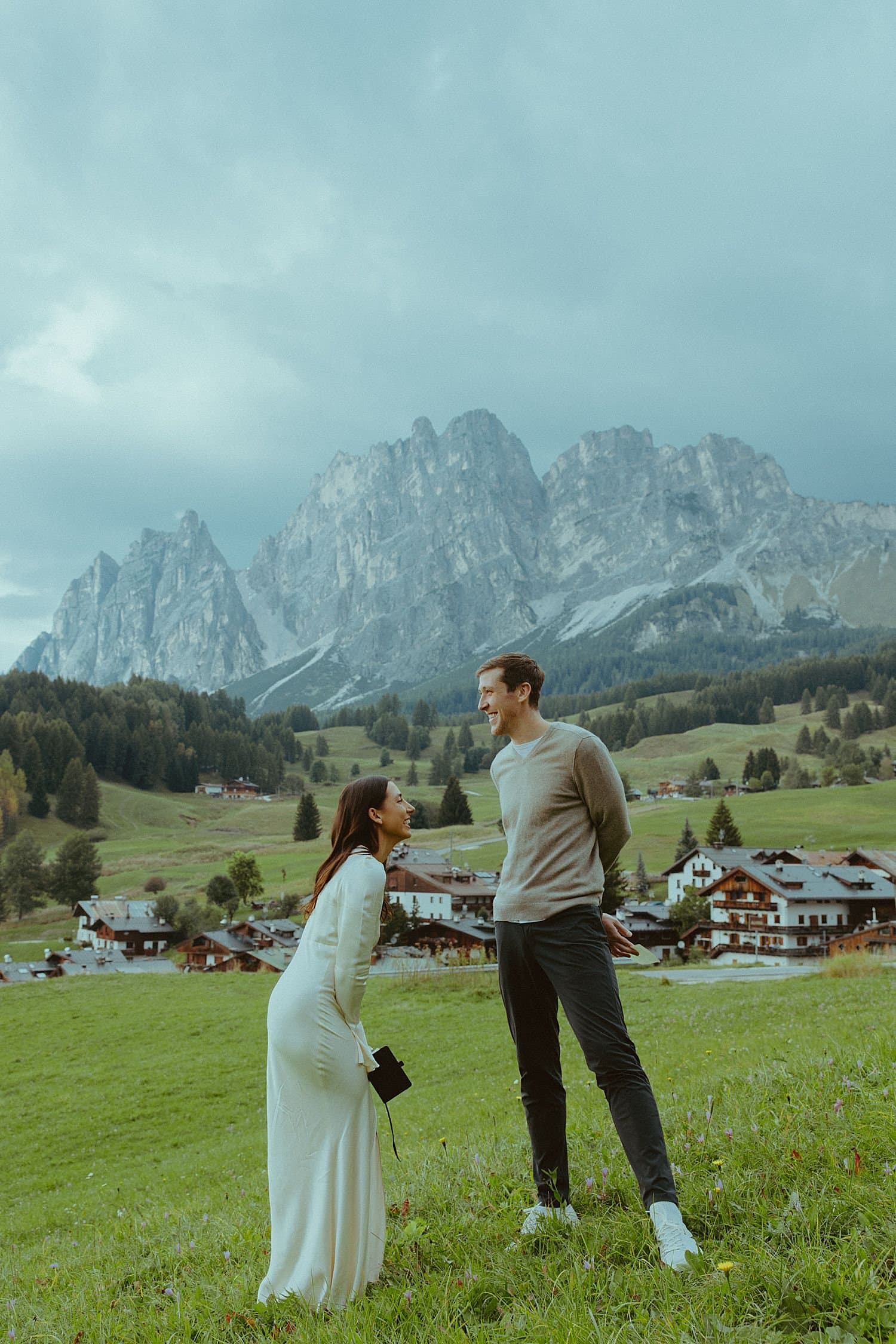
Location Guides · 12 min read
Published
In brief
The best wedding photo ideas in the Dolomites are a sunrise boat session on Lago di Braies, a ridge walk on Seceda, a first look on the Alpe di Siusi meadows, a walk toward the Tre Cime di Lavaredo at sunset, a church-and-peaks portrait in Val di Funes, alpenglow at Passo Giau, mist and cloud at Prato Piazza, snow portraits in winter, a Milky Way session at Tre Cime and a helicopter arrival. Light decides most of them: sunrise and the hour before sunset give the strongest results.
The Dolomites are a UNESCO World Heritage mountain range, and they photograph differently from any other wedding setting. The scale is enormous, the rock changes colour as the sun moves, and a single valley can offer a lake, a meadow, a chapel and a ridge within an hour's drive. That variety is the opportunity, and also the challenge: the best photo ideas depend on timing, access and weather as much as on the view.
Below are ten ideas to build a Dolomites wedding, elopement or proposal session around. Each one names the place, the best light, and one practical tip. Pick one idea as the anchor of your day, then build the timeline around its light; our guide to the best time to get married in the Dolomites helps you choose the season.
Why Dolomites wedding photos look different
Three things set Dolomites wedding photos apart. The first is scale: the rock walls rise hundreds of metres above the valleys, so a couple reads as small and the landscape as the subject. The second is colour: the pale dolomite rock reflects the low sun, producing alpenglow at the start and end of the day. The third is weather: cloud, mist and sudden storms move through quickly, so the same place can look completely different within an hour.
Those three factors explain why timing matters so much. A session at 8 am and one at 6 pm in the same spot produce different pictures, and a perfectly clear day is not always the best day. The ten ideas below are chosen to show the range: some depend on easy access, others on early starts, and others on a sense of adventure.
1. A sunrise boat session on Lago di Braies
Lago di Braies, with its wooden boathouse, jetty and rowing boats on emerald water, is the Dolomites picture most couples have in mind. The photo idea is the boat: the two of you drifting across the lake with the Croda del Becco rising behind, or a first look on the jetty while the water is still.
Go at sunrise. In season the lake fills up quickly once the boats and the day visitors arrive, and early light is soft on the water. Boat access, parking and any restrictions on the road to the lake change from season to season, so confirm the current rules and book ahead. More detail is in our Lake Braies elopement guide and on the Lake Braies location page.
Pose to try: sit close together on the edge of the jetty with your feet over the water, or sit side by side in the boat while one of you rows and the other looks back at the camera. Keep your movements slow, because ripples break up the reflections, and a calm start to the morning gives the best mirror effect.
2. A ridge walk on Seceda
Seceda is famous for its green ridgelines falling away toward the serrated Odle peaks. The photo idea is a walk along the ridge: a wide frame with the two of you small against the spires, then closer portraits once the light turns warm.
The cable car from Ortisei makes Seceda one of the most accessible high-mountain locations, but it runs on a daytime timetable, so a sunrise or sunset session usually means hiking up or staying at a hut. Wear boots under the dress and bring a layer: it is cooler and windier at altitude than in the valley. Compare it with the nearby meadows in Seceda vs Alpe di Siusi or see the Seceda location page.
Pose to try: walk along the ridge a few steps apart, then turn toward each other and pause. From a distance, two small figures emphasise the scale of the landscape; from closer, wind in a veil or jacket adds movement. Stay on marked trails and keep a respectful distance from grazing animals.
3. A first look on the Alpe di Siusi meadows
The Alpe di Siusi (Seiser Alm) is described as the largest high-altitude alpine meadow in Europe, and that openness is the photo idea: a first look in long grass with the Sassolungo and Sciliar behind you and nothing else in the frame.
Late afternoon is the sweet spot, when the light turns golden and the day visitors have thinned out. Early summer brings wildflowers; late summer brings dry gold grass. It is an easy location with short walks, which makes it a good choice for guests, parents or a longer dress. See the Alpe di Siusi location page for ideas by season.
Pose to try: stand back to back in the long grass, then turn into an embrace, or walk toward a distant hut with the Sassolungo behind you. Wide frames show the openness of the plateau, while a longer lens compresses the peaks and makes them feel closer to the two of you.
4. Walking toward the Tre Cime di Lavaredo at sunset
The three peaks of Tre Cime di Lavaredo (Cima Grande, Cima Ovest and Cima Piccola) are the most recognisable rock formation in the Dolomites. The idea is simple and powerful: walk toward them hand in hand, with the peaks glowing orange as the sun drops behind you.
Start from Rifugio Auronzo, which you reach by a toll road, and plan for a walk of a few kilometres along the loop. Sunset gives the strongest alpenglow, and a hut such as Rifugio Locatelli gives a warm backdrop for portraits. The weather changes fast at this altitude, so keep a backup time. More in the Tre Cime location guide.
Pose to try: walk toward the peaks with joined hands while one of you looks back, or sit against a rock below the towers under a shared blanket as the colour turns. Bring a warm layer for both of you, because the temperature drops fast after sunset at altitude.
5. A church-and-peaks portrait in Val di Funes
Val di Funes (Villnöss) gives the Dolomites a gentler face: green meadows, small village churches and the Odle group behind them. The photo idea is a portrait with the Santa Maddalena church or the little Ranui chapel in the frame, with the peaks standing above it.
This is a roadside-friendly location that works from morning to evening, and a good option when you want an elegant, storybook image without a long hike. Soft morning light flatters the church; the evening sun warms the peaks. Read our Val di Funes wedding photography guide for the best viewpoints.
Pose to try: a slow walk across the meadow with the church small in the frame, followed by a closer, quieter portrait with the peaks softly blurred behind. Respect the working farmland: stay on public paths and park where locals do, so the valley stays welcoming to photographers.
6. Alpenglow at Passo Giau and Cinque Torri
Alpenglow, called enrosadira in Italian, is the moment the pale rock turns pink and orange at sunrise or sunset. Passo Giau, at more than 2,200 metres, and the nearby Cinque Torri rock towers are among the best places to catch it, with the Gusela rock pyramid as a natural landmark.
The idea is a silhouette-and-glow portrait: stand a little apart from each other against the lit rock, then move close as the colour fades. Both places are reachable by road, so you spend your energy on the light rather than the walk. Explore the Passo Giau and Cinque Torri pages for details.
Pose to try: stand slightly apart so the lit rock fills the space between you, then step in as the glow fades. The colour peaks for only a few minutes, so arrive early, with the pose already agreed and the dress and veil ready before the light arrives.
7. Fog, cloud and moody weather at Prato Piazza
Not every Dolomites wedding gets blue skies, and some of the most memorable images come from the opposite. Prato Piazza (Plätzwiese), a high plateau with wide meadows, turns cinematic in low cloud: soft, quiet light and peaks that appear and disappear behind the mist.
The idea is to treat weather as part of the story rather than a problem. A good photographer plans for it with a dry spot, warm layers and a flexible start time. Our Prato Piazza elopement guide shows what this kind of day looks like.
Pose to try: stand close under a shared jacket or umbrella while the mist hides the background; soft, even light flatters skin and fabric. Cloud also hides other visitors, which can make a busy plateau feel private, and low colour contrast gives the images a calm, painterly look.
8. Snow portraits in winter
Winter turns the Dolomites into a very different place: frozen lakes, quiet trails and white peaks against a deep blue sky. The photo idea is the snowy embrace, the two of you in coats or capes, breath visible, with the mountains behind.
Winter sessions need more logistics, such as warm layers, shorter days and road or lift access, but they reward you with empty locations. Read how it works at a famous lake in our winter elopement at Lago di Braies guide, or see the winter ceremony at Cortina d'Ampezzo.
Pose to try: a cape or coat over the dress, a long scarf moving in the cold air, and a forehead touch or a kiss while snow falls. Cold hands need warming between shots, so keep gloves, hand warmers and a hot drink close at hand, and schedule the session for the warmest part of the day.
9. Blue hour and the Milky Way at Tre Cime
After sunset, the Dolomites have a second act. During blue hour the sky turns deep blue while the peaks still hold a trace of light, and on a clear, moonless night the Milky Way can stretch above the Tre Cime. The idea is a quiet portrait of the two of you under the stars, lit softly by a lantern or a headlamp.
This is the most demanding idea on the list. It involves a night in the mountains, a stay at a hut or a hike in the dark, and a clear forecast. The reward is an image almost nobody else has. Plan it as an extra to a daytime session rather than the only plan.
Pose to try: stand perfectly still for the exposure while one of you holds a lantern low, so the light falls softly on your faces and the dress. Long exposures need patience, so rehearse the pose once in daylight. The Milky Way is best from late spring to early autumn, away from town lights.
10. A helicopter arrival above the peaks
For a once-in-a-lifetime opening scene, a private helicopter flight lands the two of you on a high meadow or ridge, with the rotors and the mountains as the backdrop. It is the most cinematic of the ten ideas, and the one that needs the most coordination.
Flights depend on weather and on landing permissions, and the cost sits well above the other ideas. Our guide to helicopter and luxury add-ons for a Dolomites wedding covers what is possible and what to ask before you book.
Pose to try: the walk-away shot as the helicopter lifts off behind you, followed by a quiet portrait on the landing spot once the rotors stop. Keep veils, hats and loose items secured near the rotors, and follow the pilot's instructions at all times; the safety briefing always comes before the photos.
Poses that photograph well in the mountains
The simplest poses work best at this scale. Walking hand in hand toward the view, with the camera ahead of or behind you, looks natural because you are doing something real. The pauses inside the walk, such as a laugh, a kiss on the forehead or a look back over the shoulder, make the strongest frames.
Use the landscape to size the moment. In wide shots keep the two of you small and let the peaks carry the drama; for closer portraits, step into softer light or into the shadow of a rock for even skin tones and calmer expressions.
Plan for wind. A veil, a long skirt or a cape can catch the breeze and add motion, but they can also tangle. A short rehearsal, a few clips and a calm helper make a real difference, especially on exposed ridges.
Include your guests or family if they are coming. A group walk, a toast at a mountain hut or a small ceremony on a meadow all fit naturally, and quiet details such as rings, flowers and hands give variety between the big landscape frames.
Tips that make every idea work better
Choose one anchor location and plan around its light. Trying to fit five locations into one day costs you the golden hour at all of them. Allow travel and walking time between places, and leave slack for cable cars, traffic and weather.
Dress for the mountain as well as the camera: boots under a gown, a warm layer for the walk, and a veil that will not tangle in the wind. Our mountain elopement dress guide goes into fabrics and shoes.
Keep a weather backup. A lower-altitude location, a different hour or a rescheduled sunrise often saves the day. And check access rules in advance: some places ask for authorisation for professional photography, and a local photographer will include this in your plan.
Which idea fits your day?
The table below compares the ten ideas by place, best light and effort, so you can match them to your timeline and to your guests. If you are weighing a full elopement around one of these ideas, see our elopement photography service, and for a larger celebration our luxury wedding photography. To budget for the day, start with the Dolomites wedding cost guide.
Plan your Dolomites photo day
If one of these ideas speaks to you, the next step is to match it to your date and your location. Tell us your season, your guests and the idea you love most through the contact page, and we will suggest a realistic timeline with a weather backup. You can also explore our Dolomites locations or browse our photography services before you write.
| Idea | Where | Best light | Effort |
|---|---|---|---|
| Sunrise boat session | Lago di Braies | Sunrise | Early start, short walk |
| Ridge walk | Seceda | Late afternoon or sunrise | Cable car plus a short walk |
| First look in the meadow | Alpe di Siusi | Golden hour | Easy |
| Walk toward the peaks | Tre Cime di Lavaredo | Sunset | Moderate |
| Church and peaks portrait | Val di Funes | Morning or evening | Easy |
| Alpenglow portrait | Passo Giau, Cinque Torri | Sunrise or sunset | Easy, roadside |
| Mist and cloud | Prato Piazza | Soft, overcast light | Moderate, seasonal access |
| Snow portraits | Braies, Cortina, Alpe di Siusi | Midday winter light | Varies, winter gear needed |
| Blue hour and Milky Way | Tre Cime di Lavaredo | After sunset, clear moonless night | Demanding, night |
| Helicopter arrival | High meadow or ridge | Morning or late afternoon | Easy for you, needs permissions |
Frequently asked questions
What are the best places for wedding photos in the Dolomites?
The most photographed locations are Lago di Braies, Seceda, the Alpe di Siusi, the Tre Cime di Lavaredo, Val di Funes and Passo Giau. Each has a different character: lake, ridge, meadow, iconic peaks, village church and alpenglow. Choosing one anchor location and planning the day around its light gives better results than trying to see them all.
What is the best time of day for wedding photos in the Dolomites?
Sunrise and the hour before sunset. The light is soft, the crowds are thinner, and the rock can turn pink and orange (alpenglow, or enrosadira). Midday sun is harsh in the mountains and the most popular places are busiest then.
What is the best month for wedding photos in the Dolomites?
Late May to September is the main season, with green meadows and long evenings. October adds golden larches, and January and February bring snow. Each season suits different ideas, so see our guide to the best time to get married in the Dolomites.
Do I need a permit for wedding photos in the Dolomites?
Rules vary by location, and some places ask for authorisation for professional photography. A local photographer checks this for your date and location and includes it in your planning document. Always confirm current rules before you travel.
How long does a wedding photo session in the Dolomites take?
A focused couple session usually takes two to three hours including travel and walking. Locations that need a hike, a cable car or a very early start take longer, so allow extra time and keep a flexible schedule.
What should we wear for wedding photos in the Dolomites?
Choose fabrics that move well in wind, bring a warm layer, and wear comfortable boots for the walk, changing into dress shoes only for the photos. At altitude it is cooler than in the valley, even in summer.
Can we avoid the crowds at Lago di Braies?
Yes, by going at sunrise or very early in the morning, before the boats and day visitors arrive. Outside the summer peak, the lake is much quieter. Check boat availability and access rules ahead of time and book early.
What if the weather is bad on our photo day?
Plan a backup: a different hour, a lower-altitude location or a second day. Mist and cloud can produce some of the most atmospheric images, so a good plan treats weather as part of the story rather than a failure.