Styling & Preparation · 6 min read
Published · Updated
In brief
The biggest mistake we see couples make: dressing for the ceremony moment itself and forgetting the walking on either side of it. Alpine terrain is uneven, often slightly damp, and can be genuinely windy even on a warm, sunny day at valley level — and none of that changes just because you're wearing formalwear. The good news is that almost every one of these problems has a straightforward, well-tested solution, and most of them cost nothing beyond a bit of planning ahead of the day.
Layering: what goes under and over the dress
Experienced mountain and adventure elopement photographers consistently recommend layering underneath the dress rather than relying on the dress fabric alone for warmth, since even silk organza or tulle offers next to no insulation on its own. Leggings, a thermal base layer, or simply a slip worn under the gown are the standard, low-visibility way to add real warmth without changing how the dress looks in photographs — nobody sees what's underneath, and you stay considerably more comfortable through a session that often runs longer than a typical ceremony.
On top of the dress, a detachable wrap, a faux-fur shawl, or a tailored coat works as an outer layer you can put on and take off between shots, rather than a single choice you're stuck with for the whole session. This is standard, widely used practice among photographers who shoot at altitude regularly, precisely because temperatures swing so much between a sheltered spot and an exposed ridge, or between full sun and a passing cloud.
Choosing a dress built for the terrain, not just the ceremony
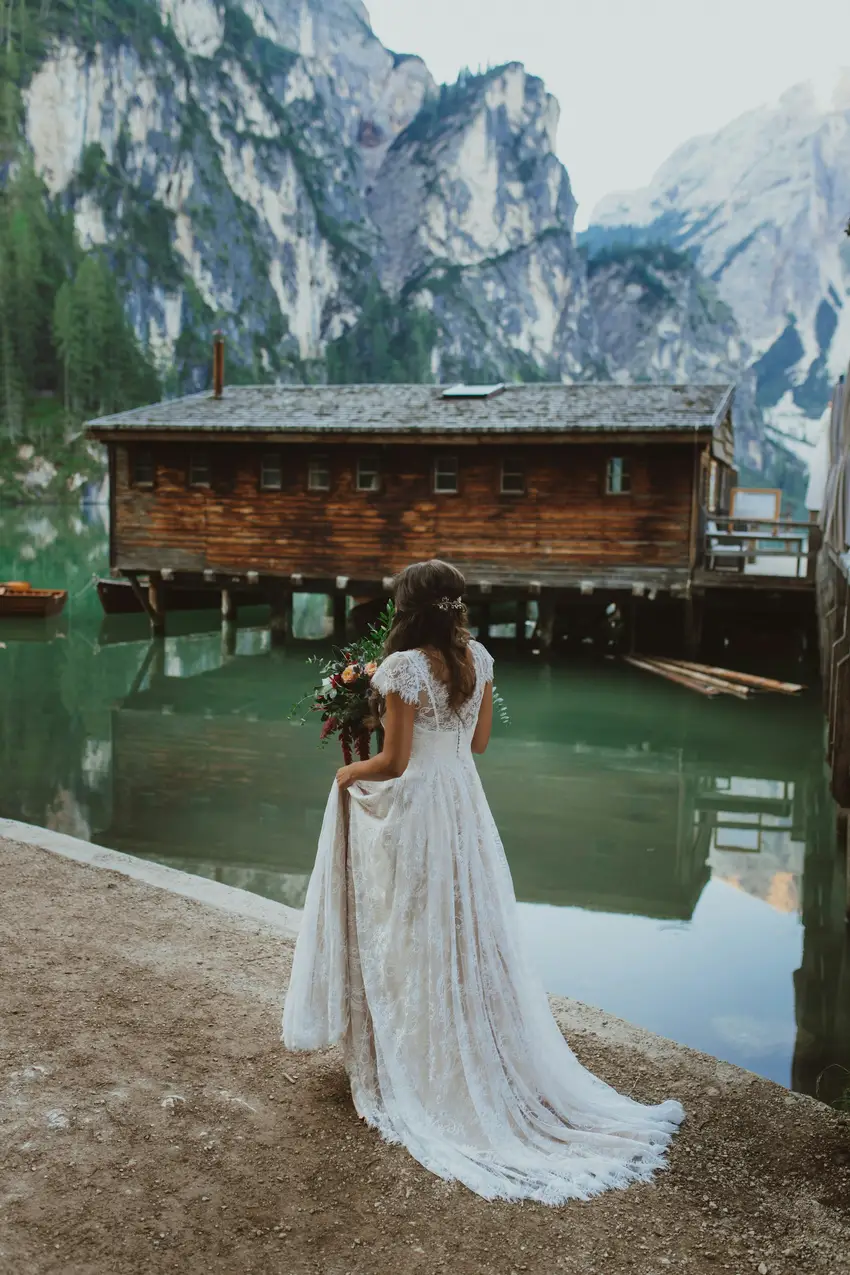
If a real hike is part of the day's plan, a shorter or high-low hemline, or a detachable overskirt or train, is worth considering from the very start rather than as an afterthought. Full-length fabric that's fine for a flat aisle can drag, catch on rock, or pick up moisture on an uneven alpine trail — a detachable piece lets you hike in a shorter silhouette and then reattach the fuller train for the stationary ceremony portraits, getting both the practicality and the photograph you actually want.
Fabric choice matters just as much as cut. Silk organza and lightweight tulle are the two fabrics that photograph best in mountain wind: they move dramatically without weighing the dress down on a walk, and they pack down small for travel, which matters more than you'd expect once you're carrying a garment bag through an airport and a cable car station on the same trip.
Footwear and cold-weather extras
Sturdy shoes or boots for the approach, with a lighter or more formal pair swapped in only for stationary shots, is close to universal advice among photographers who work in mountain terrain regularly — trail sneakers or slip-on flats under the dress for the walk in, then heels or dressier shoes that go on and immediately come back off around the ceremony itself. Carrying both is a small inconvenience that avoids a much bigger one: a twisted ankle or ruined shoes an hour into the day.
Hand and foot warmers are also worth packing, particularly for sunrise sessions or anything above around 2,000 metres, where temperatures can sit well below what you'd expect from a summer date at valley level. They're inexpensive, take up almost no space, and make a real difference to how comfortable — and how genuinely happy in the photographs — you look during the stiller, more static parts of a shoot like formal portraits or a vow exchange.
Matching your outfit to your chosen location
How much of this actually applies to you depends heavily on which location you've chosen. At gentler, flatter terrain like Alpe di Siusi or Val di Funes, a fuller, longer gown works comfortably with little to no adjustment — see our comparison of Seceda and Alpe di Siusi if you're still weighing up terrain as part of your location decision. At steeper, rockier locations like Seceda, the detachable-overskirt and sturdy-footwear approach earns its place far more, since the terrain itself is doing more of the work against your dress.
At Lago di Braies or Prato Piazza, the main consideration is less about the walking and more about the cold: sunrise sessions at the lake happen before the day has properly warmed up, and the open plateau at Prato Piazza offers little shelter from wind even on a calm-looking day. A warm outer layer and hand warmers matter more here than a hiking-specific dress adjustment would. Whichever location you've chosen, wardrobe advice specific to that setting and season is built into every elopement package we offer, so you're never guessing at what the day will actually feel like on the ground.
What the groom or second partner should pack
The same layering logic applies on the other side of the couple. Wool or technical-blend suiting handles alpine temperature swings far better than cotton or linen, which either overheats on the walk up or leaves you cold the moment you stop moving for photographs. A packable coat that folds down small enough for a daypack means it's genuinely realistic to carry between shots rather than leaving it behind at the hotel and regretting it later. The same sturdy-shoes-then-swap approach applies here too: proper footwear for the approach, smarter shoes only for the moments the camera is actually on you.
Across every location, a short list of items covers most of what actually matters on the day: an under-layer for warmth, a detachable outer layer you can remove between shots, sturdy shoes for the approach with a lighter pair for stationary portraits, and hand or foot warmers tucked into a bag for anyone waiting around in the cold. None of it changes how the final photographs look — if anything, dressing properly for the conditions is what lets you relax into the moment instead of visibly bracing against the wind, which is usually the difference between a good elopement photograph and a great one.
None of this needs to be figured out alone: wardrobe guidance specific to your chosen location, season and timeline is built into every session we plan, precisely because the right outfit choices change so much depending on where and when you're eloping.
Frequently asked questions
Will my dress get damaged hiking to the location?
A detachable overskirt or train protects the main dress and can be removed entirely for the walk, then reattached at the location.
What should the groom or second partner wear?
Wool or technical-blend suiting handles temperature swings far better than cotton, with a packable coat for between shots.
Do I need to wear layers under my dress even if it's summer?
Yes — temperatures at altitude sit well below valley readings even in July, and dress fabric alone offers very little insulation. Leggings, a thermal layer or a simple slip underneath is standard practice and invisible in photographs.
Should we bring hand or foot warmers?
For a sunrise session or anywhere above roughly 2,000 metres, yes. They're inexpensive, take almost no space, and make a real difference to comfort during the stiller, more static parts of a shoot.
What kind of hemline works best if a real hike is involved?
A shorter or high-low hemline, or a detachable overskirt or train, planned from the start rather than as an afterthought — it lets you hike comfortably and still get the fuller silhouette in the stationary ceremony photographs.