Planning & Budget · 7 min read
Published · Updated
In brief
There's no single 'best' month to get married in the Dolomites — there's a best month for the mood you want. Summer gives long days and full high-altitude access; autumn gives colour and quiet; winter gives real drama alongside real logistical risk; and spring gives a quiet, uncrowded middle ground with the least predictable weather of the year. Weather at altitude can also shift faster than valley forecasts suggest, which is one more reason the right season for you depends as much on what backup plan you're comfortable with as on the postcard version of each month. This guide walks through what each season actually looks and feels like on the ground, not just in a brochure photo.
Summer (June–August): the most reliable window
July and August are the most reliable months for weather and full cable-car access across the region, which matters directly if your ceremony location depends on a lift to reach it — Seceda, for instance, or several of the higher viewpoints around the Val Gardena valley. It's also, unsurprisingly, the busiest season on the trails and at the best-known viewpoints, with day-hikers and tourists filling popular spots by mid-morning. This is also the season when the widest range of amenities — mountain restaurants, rifugios and cable car infrastructure — is running at full capacity, which matters if your day includes multiple locations reached by lift.
Because of that crowd factor, sunrise sessions matter more here than in any other season — arriving before the first cable cars and day-hikers is often the difference between having a ridge or a meadow entirely to yourselves and sharing it with dozens of other visitors. If full facility access and predictable weather are non-negotiable for your plans, summer is the safest season to book, provided you build the timeline around early starts rather than a leisurely late-morning ceremony. It's a trade worth making deliberately, since the difference between a 6am start and a 9am start at a popular viewpoint can be the entire experience of the day.
Autumn (September–October): the best-kept secret
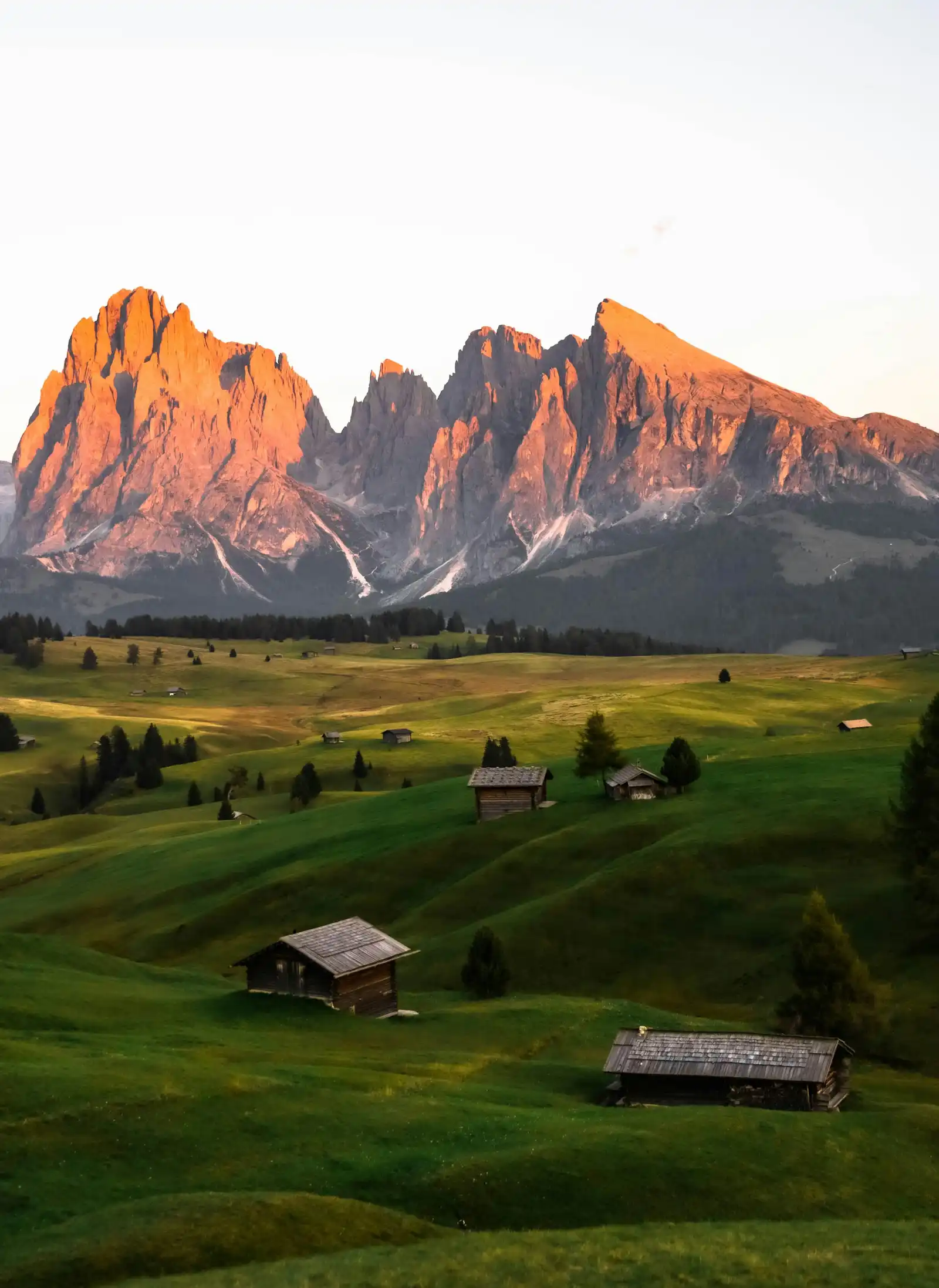
Late September into October is, for most photographers who work here year-round, the season most couples underrate before they see it: larch forests turn gold across entire hillsides, the air is noticeably clearer than in summer haze, and midday light stays soft enough to shoot outside the strict golden-hour window that dominates summer planning. It's a window that rewards couples willing to trade a slightly cooler evening for noticeably better photographs, and it's become increasingly requested for exactly that reason.
September to October is widely considered, across Dolomites wedding photographers generally, the best overall window for a wedding here: the weather is more stable than spring, the crowds have thinned noticeably from their summer peak, and the colour is dramatically better than the flat green of midsummer meadows. The trade-off is a shorter daylight window and cooler evenings, both easy to plan around with the right layering and an earlier ceremony start. It's also, in our experience, the season most likely to produce the single best images of the whole year, simply because the combination of light, colour and calm conditions rarely lines up this well at any other time.
Winter (December–March): drama with real trade-offs
Winter weddings are stunning but logistically demanding — several cable cars close or run a reduced schedule through the colder months, and a number of high-altitude locations reached only by lift, like Seceda's summit ridge, become inaccessible or fully snow-covered for the season. Road-accessible, lower-altitude locations remain a strong option throughout, but the list of available high-altitude viewpoints shrinks considerably compared to summer or autumn. That said, a genuinely snow-covered ceremony at a lower elevation is very achievable, and several of our couples specifically choose December through February for exactly that look, planned around locations that stay reliably accessible.
Winter suits couples who specifically want snow as part of the image — a genuinely different mood from every other season — provided you're planning around a road-accessible location rather than fixed on a specific summit that may simply be closed for the season. That trade-off is worth making consciously rather than discovering it after a date is already booked. Building flexibility into your location choice matters more in winter than at any other time of year.
Spring (March–May): quiet, but the least predictable weather
Spring is the quietest season in the Dolomites by visitor numbers — melting snow, early alpine blooms low in the valleys, and a region that hasn't yet filled with summer traffic. It's also the season with the least predictable weather of the year, since winter conditions can linger at altitude well into April in some years, and high-altitude trails can stay snow-covered even as the valley floor turns green. For couples drawn to early wildflowers and a genuinely quiet trail system rather than a specific classic viewpoint, spring rewards flexibility more than any other season.
If a spring date appeals to you for the quiet and the generally lower shoulder-season lodging costs that come with it, build in extra weather flexibility from the start — a wider date range if your travel plans allow it, and a location with a strong lower-altitude backup, the way our wedding and elopement packages plan for regardless of season or date.
None of these four seasons is a wrong choice — each simply trades one thing for another: reliability for crowds in summer, colour for cooler evenings in autumn, drama for access in winter, and quiet for unpredictability in spring. Being honest with yourself about which tradeoff you can live with is a more useful planning question than searching for a single objectively 'best' month.
Whichever season you land on, pairing this guide with our cost and budget guide and, if a legally binding ceremony matters to you, our guide to Italy's legal requirements, covers the two other major planning decisions that tend to move alongside your date. Location choice matters here too — some of our locations, like Cortina, work well nearly year-round, while others depend entirely on a single season's access.
Frequently asked questions
Is September or October better for photos?
September has more stable weather; October has better colour, since the larches turn gold from roughly the last week of September through mid-October depending on altitude.
Can we get married in the Dolomites in winter?
Yes, at lower-altitude, road-accessible locations. High cable-car-dependent spots like Seceda often have reduced access in deep winter.
Is spring a good time for a Dolomites wedding?
It can be a lovely, quiet choice, but it's the season with the least predictable weather of the year — lingering snow at altitude is common well into spring, so plan a location with a strong lower-altitude backup.
Which season gives the most reliable weather?
Summer, specifically July and August, is the most weather-reliable window and also the one with full cable-car access — the trade-off is that it's also the busiest season on the trails.
How do you avoid crowds during peak summer season?
Sunrise and late-golden-hour timing, which is how we plan every summer session at popular viewpoints regardless of season.
Should we plan a backup date or location for the weather?
Yes, and every one of our packages builds a weather-alternate plan in from the start, whichever season you choose — it matters most in spring and winter, but it's part of the plan year-round.